If you run an online store, you’ve probably asked yourself this question more than once:
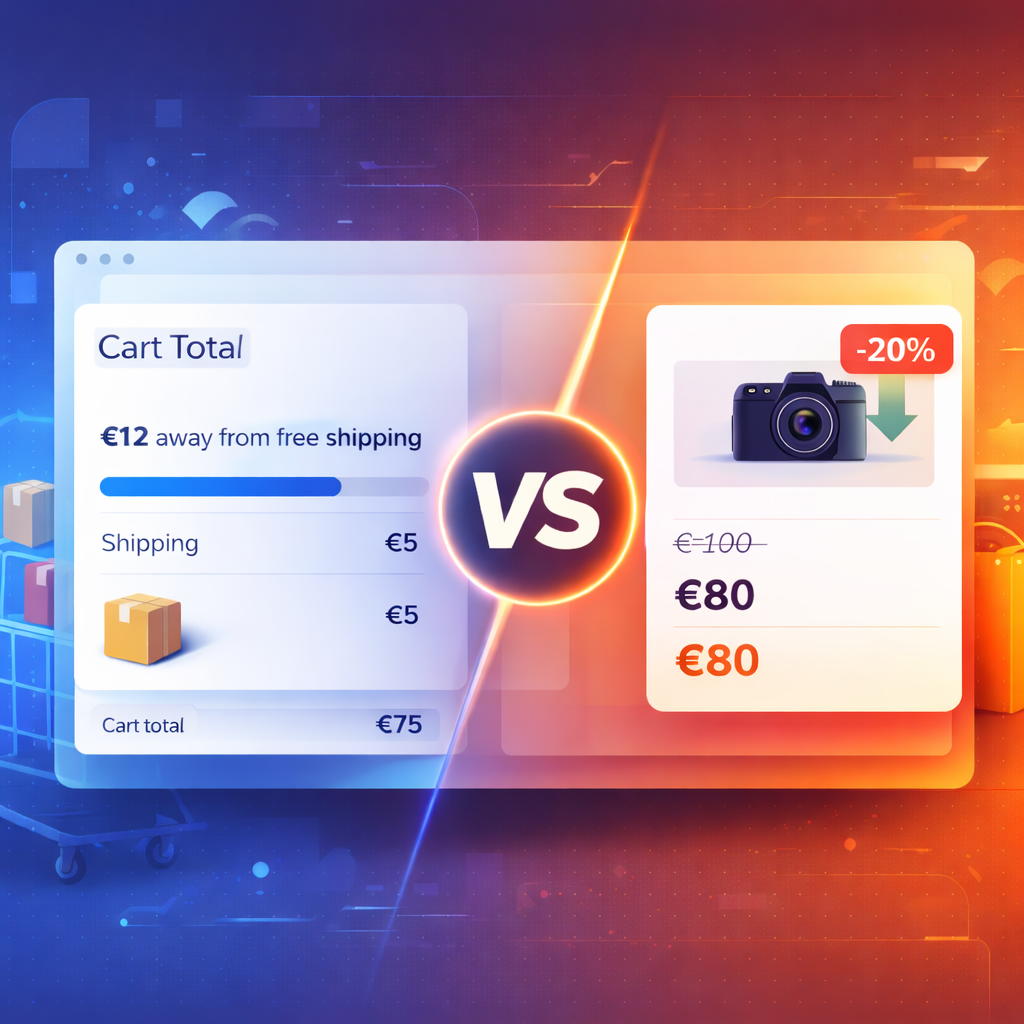
Should you offer free shipping vs discounts to increase sales?
Both incentives are extremely common in eCommerce. You see them everywhere — banners offering 10% off, popups with coupon codes, or messages promising free shipping on orders over a certain amount.
At first glance, they seem similar. After all, both reduce the final price the customer pays.
But here’s the interesting part: customers often perceive them very differently.
In many cases, shoppers value free shipping more than an equivalent discount, even if the financial benefit is actually smaller. At the same time, discounts can outperform shipping incentives depending on the product, price point, and the stage of the buying process.
That’s why understanding the difference between free shipping vs discounts is important for any online store. The wrong strategy can eat into your margins without improving conversions, while the right one can increase sales and even boost your average order value.
In this guide, we’ll break down:
- Why free shipping and discounts influence customer behavior differently
- When free shipping converts better than discounts
- When discounts work better than shipping incentives
- How to combine both strategies to increase conversions and order value
By the end, you’ll have a clear understanding of which approach makes the most sense for your WooCommerce store and how to use it effectively.
Why Free Shipping Often Feels More Valuable Than Discounts
From a purely mathematical perspective, free shipping and discounts can deliver the same financial benefit.
For example:
- Product price: €50
- Shipping cost: €5
Two possible offers:
- 10% discount → customer saves €5
- Free shipping → customer saves €5
The monetary value is identical.
But customer perception is not based purely on math.
The “Shipping Pain” Effect
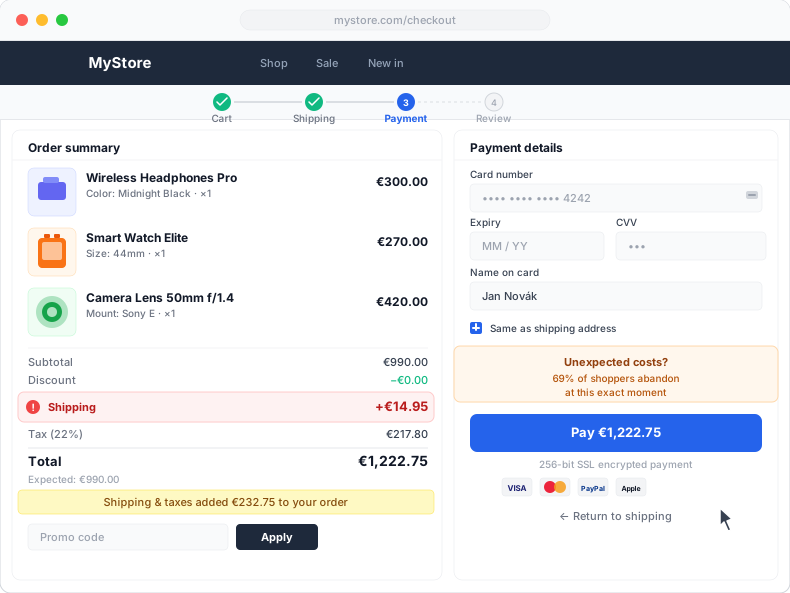
Customers tend to see shipping as a separate and often frustrating cost. It appears late in the checkout process and can feel like an unexpected penalty.
When shoppers encounter shipping fees, many perceive them as an extra charge rather than part of the product price.
This creates what researchers sometimes call “shipping pain.”
Customers dislike paying for shipping more than they dislike paying a slightly higher product price.
That’s why removing the shipping cost often feels like a bigger win than receiving an equivalent discount.
Free Shipping Reduces Checkout Friction
One of the most common reasons for cart abandonment is unexpected extra costs at checkout — especially shipping fees. Research from the Baymard Institute consistently shows that extra costs like shipping and taxes are among the top reasons customers abandon carts.
When a store clearly offers free shipping, it removes one of the most common barriers to completing the purchase.
Instead of calculating additional costs, the customer sees a simpler decision:
“The price you see is the price you pay.”
That simplicity reduces hesitation and can increase conversion rates.
Free Shipping Also Encourages Higher Cart Values
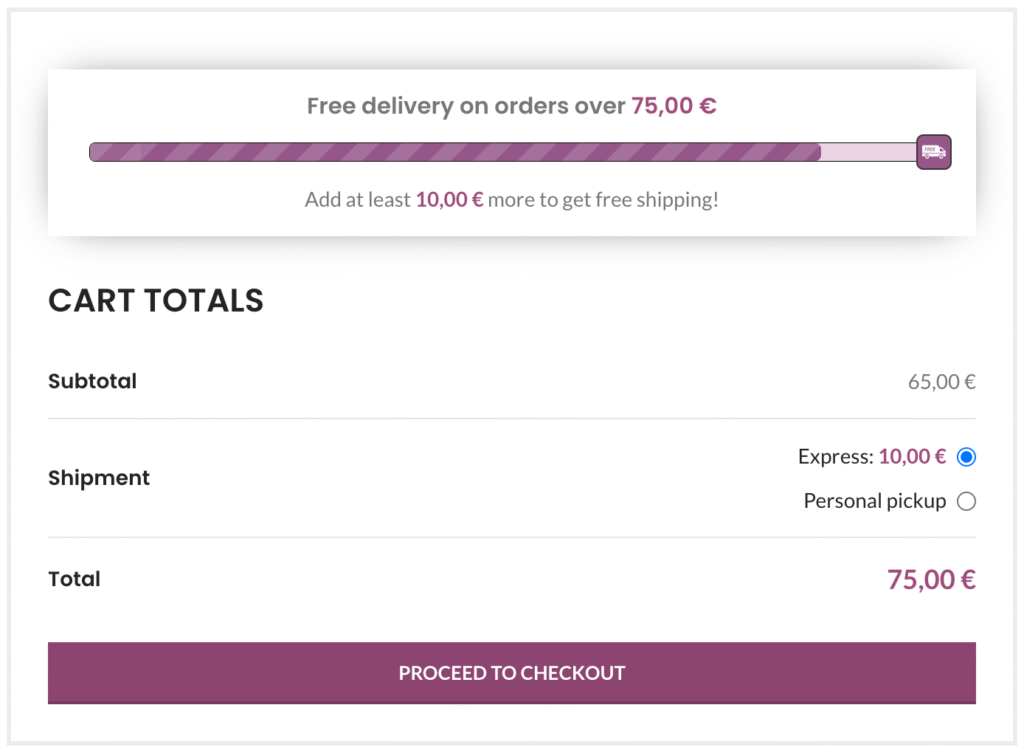
Another reason free shipping performs so well is that it can be tied to a minimum order threshold.
For example: Free shipping on orders over €75
When customers are close to the threshold, many will add one more product to their cart just to unlock the benefit.
This behavior increases average order value, which is one of the most effective ways to grow revenue without increasing traffic.
Some WooCommerce stores reinforce this behavior using a free shipping progress bar, which visually shows customers how close they are to qualifying for free shipping. This simple cue can motivate shoppers to add one more item and complete their purchase.
When Discounts Work Better Than Free Shipping
While free shipping often improves conversions, there are situations where discounts are the stronger incentive.
The key difference is that discounts feel more immediate and tangible. Customers see the price drop directly on the product, which can create a stronger sense of urgency.
In some cases, that immediacy makes discounts the more effective incentive.
When the Product Price Is High
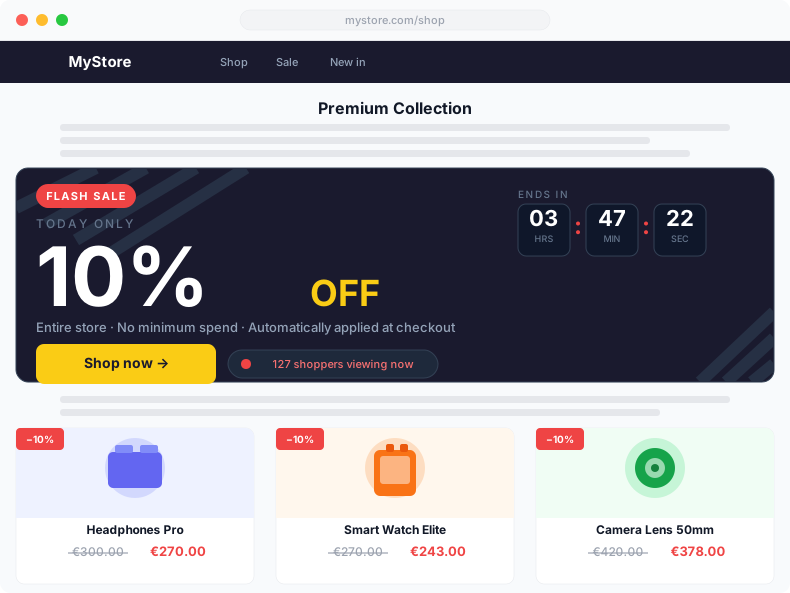
For higher-priced products, percentage discounts often feel more significant than free shipping.
For example:
- Product price: €300
- Shipping cost: €10
Two offers:
- Free shipping → customer saves €10
- 10% discount → customer saves €30
In this case, the discount clearly delivers a larger benefit, and customers can easily see the difference.
Large visible savings tend to trigger stronger buying motivation than removing a relatively small shipping cost.
When You Need Short-Term Sales Boosts
Discounts are also very effective for time-limited promotions such as:
- seasonal campaigns
- holiday sales
- clearance events
- product launches
Because discounts are easy to communicate — “20% off today only” — they create urgency and can quickly drive traffic and purchases.
Free shipping usually feels more like a store policy, while discounts feel like a temporary opportunity customers don’t want to miss.
When You Want to Move Inventory Quickly
If you need to clear stock, discounts are usually the faster tool.
Reducing the product price directly signals that the item is a good deal. Customers browsing the store or comparing products will immediately notice the lower price.
Free shipping alone may not be enough to motivate buyers if the product itself is not perceived as a strong value.
When Your Shipping Costs Are Unpredictable
For stores with complex logistics — international shipping, bulky products, or large variations in shipping costs — offering free shipping can quickly become expensive.
In these cases, discounts give you more control over margins.
You decide exactly how much revenue you’re giving up, without being exposed to variable shipping costs.
Free Shipping vs Discounts: Which One Increases Average Order Value?
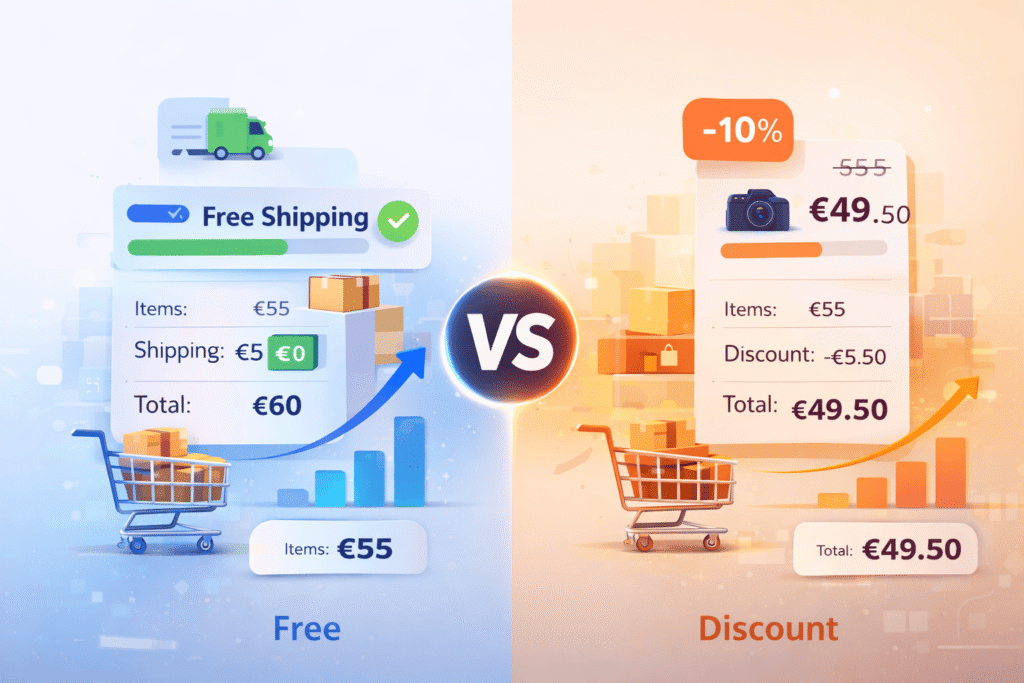
One of the biggest advantages of free shipping is its ability to increase average order value (AOV).
Instead of simply reducing the price of a product, free shipping can encourage customers to add more items to their cart in order to unlock the benefit.
The Free Shipping Threshold Strategy
Many stores use a simple rule: Free shipping on orders over €75
This creates a clear incentive for customers who are close to the threshold.
For example:
- Cart value: €62
- Free shipping threshold: €75
Instead of paying for shipping, many customers will simply add another product to reach the free shipping limit.
From the customer’s perspective, this feels like getting more value for their money, even though they are actually spending more.
From the store’s perspective, this strategy increases revenue per order while the shipping cost remains roughly the same.
If you’re not sure where to set your threshold, check our guide on how to choose the right free shipping threshold—it covers what actually works in practice.
Why Discounts Don’t Increase Cart Value as Effectively
Discounts usually work differently.
If you offer a 10% discount on all products, customers don’t need to change their behavior. They simply receive a lower price on whatever they were already planning to buy.
This means discounts often reduce revenue per order, while free shipping can actually increase it.
That’s why many stores use free shipping thresholds as part of their broader strategy to grow average order value rather than relying solely on discounts.
Visual Cues Make the Strategy Even More Effective
One challenge with free shipping thresholds is that customers may not always realize how close they are to qualifying.
A simple visual cue can solve this problem.
Many WooCommerce stores display a progress message or progress bar in the cart that shows customers how much more they need to spend to unlock free shipping. This keeps the incentive visible throughout the shopping process and encourages customers to add one more product to reach the goal.
When customers see they are only a few euros away from free shipping, the decision becomes much easier.
Free Shipping vs Discounts: Pros and Cons
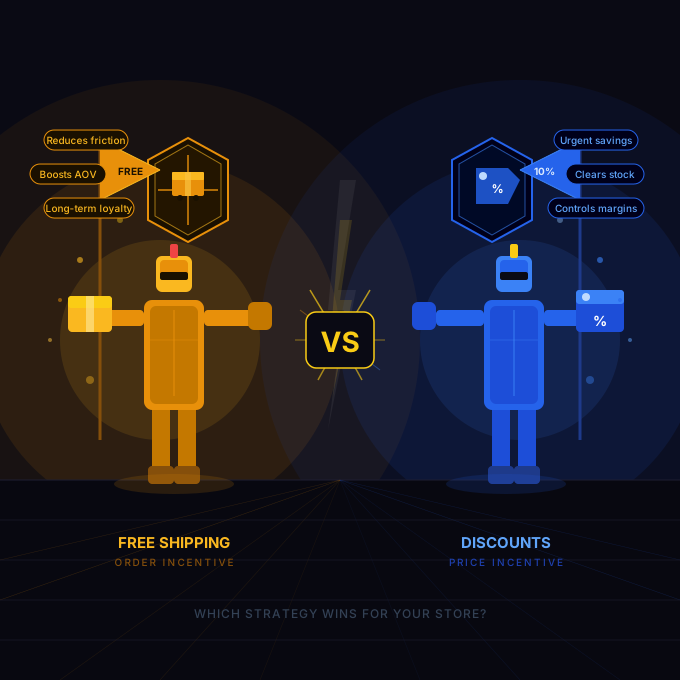
Both strategies can increase conversions, but they work in different ways and come with different trade-offs. Choosing the right one depends on your product prices, margins, and overall store strategy.
Below is a quick comparison of the strengths and weaknesses of each approach.
Free Shipping
Pros
- Often perceived as more valuable than an equivalent discount
- Reduces friction at checkout by removing extra costs
- Can increase average order value through free shipping thresholds
- Easy for customers to understand and remember
- Works well as a long-term store incentive
Cons
- Shipping costs must be absorbed by the store
- Can reduce margins if thresholds are set too low
- More difficult to manage with international or variable shipping costs
- May not feel significant for expensive products
Discounts
Pros
- Immediate and clearly visible price reduction
- Effective for promotions, campaigns, and seasonal sales
- Useful for clearing inventory quickly
- Easier to control margins with fixed percentages or amounts
- Works well for higher-priced products
Cons
- Reduces revenue on every order
- Does not encourage customers to increase cart value
- Frequent discounts can train customers to wait for sales
- Too many promotions can reduce perceived product value
Key takeaway: Free shipping often performs better for increasing cart value, while discounts are stronger for short-term promotions and urgent sales.
How Smart Stores Combine Free Shipping and Discounts
The most effective stores rarely choose only one strategy.
Instead, they combine free shipping and discounts to guide customers toward higher cart values while still offering attractive incentives.
This approach creates multiple purchase triggers rather than relying on a single promotion.
The Tiered Incentive Strategy
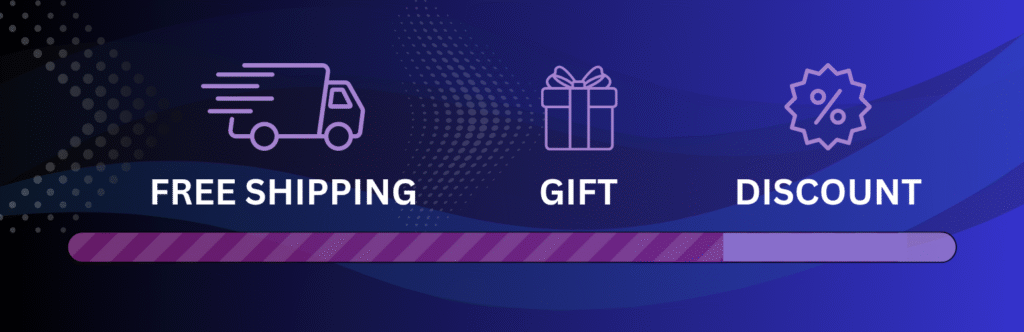
A common strategy is to introduce multiple spending thresholds, each unlocking a different reward.
For example:
- €50 → Free shipping
- €75 → 10% discount
- €100 → Free gift
This type of structure gives customers a clear path to follow. Once they unlock the first reward, they often continue adding products to reach the next one.
Instead of asking “Should I buy this?”, the customer starts thinking:
“I’m already close… I might as well add one more item.”
Making Rewards Visible During Shopping
Tiered incentives work best when customers can clearly see their progress.
When rewards are hidden or only mentioned on a promotional banner, most shoppers forget about them during browsing.
That’s why many stores use visual progress indicators in the cart or mini-cart to show customers how close they are to the next reward. These cues keep the goal visible throughout the shopping journey and can significantly increase the likelihood of customers adding additional items to their cart.
For example, a message like: You’re only €12 away from free shipping
can be enough to motivate customers to continue shopping.
The Goal: Increase Value Without Hurting Margins
The goal of combining incentives is not to give away more discounts.
It’s to increase the total value of each order while offering customers rewards that feel worthwhile.
Free shipping encourages customers to reach a threshold. Discounts can then be used selectively — for campaigns, product launches, or limited-time promotions.
When used together, these incentives create a shopping experience that feels rewarding for customers while still protecting your store’s profitability.
If you want to implement this strategy in WooCommerce, a practical approach is to use a progress-based free shipping incentive combined with selective discounts. The Free Shipping Label plugin helps you display dynamic messages that encourage customers to reach the free shipping threshold directly in the cart or product pages. For stores that want to combine both incentives, the FSL Discount Add-On allows you to apply additional discounts once the threshold is reached, creating a layered promotion that increases average order value without relying on large blanket discounts.
Free Shipping vs Discounts: Which Should You Choose?
There isn’t a single answer that works for every store. The better question is which strategy fits your products, margins, and sales goals.
Free shipping tends to perform best when your goal is to increase average order value and reduce checkout friction. Customers dislike unexpected shipping costs, and removing them can make the buying decision easier. When combined with a minimum order threshold, free shipping often encourages shoppers to add one more item to their cart.
Discounts, on the other hand, are more effective when you need short-term momentum. They work well for seasonal promotions, product launches, or clearing inventory because the price reduction is immediate and easy for customers to understand.
In practice, many successful stores combine both strategies. Free shipping can act as the baseline incentive that increases cart value, while discounts are used selectively for campaigns and special offers.
The key is to think about incentives as part of your overall pricing and conversion strategy, not just as occasional promotions.
Simple rule:
Use free shipping to increase order value.
Use discounts to accelerate sales when needed.
If you run a WooCommerce store and want to implement a free shipping threshold strategy, a simple progress bar or cart message can make the incentive far more visible to shoppers. Showing customers exactly how close they are to free shipping often encourages them to add one more item to their cart and complete the purchase.