
WooCommerce continues to power a significant share of the world’s online stores, and 2026 has brought a fresh wave of innovation to its plugin ecosystem. From tightening regulatory compliance requirements across the EU to the growing demand for AI-driven personalization, store owners are looking for tools that do more than just add features. They want plugins that actively drive revenue, reduce legal risk, and improve the customer experience end-to-end.
This year’s standout trends include the surge in demand for EU e-invoicing compliance tools following the rollout of the Peppol mandate, the rapid expansion of data privacy laws beyond GDPR into regions like India (DPDPA) and the US, and a renewed focus on post-purchase engagement through subscriptions, loyalty programs, and smart coupon strategies. WooCommerce store owners are also investing heavily in checkout conversion optimization, automated marketing, and multilingual selling, recognizing that sustainable growth depends as much on retaining existing customers and expanding into new markets as it does on acquiring new ones.
Trending WooCommerce Plugins in 2026
1. PDF Invoices and Packing Slips for WooCommerce
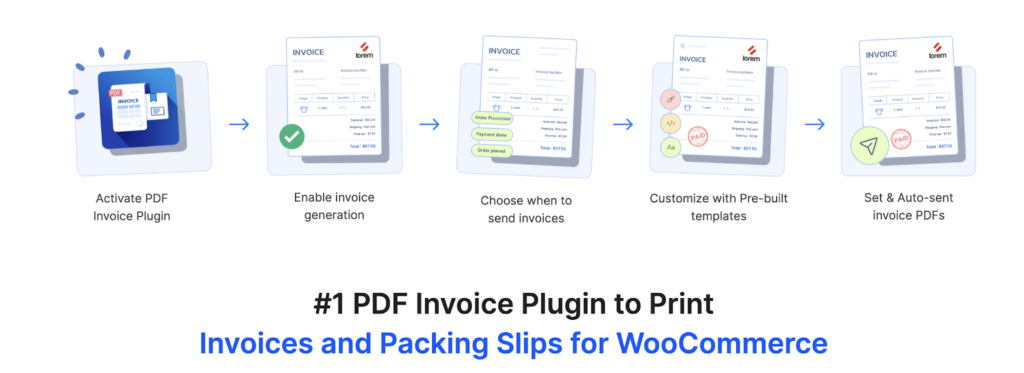
As EU e-invoicing mandates accelerate across member states, Woocommerce pdf invoice have become one of the most strategically important plugins in the WooCommerce ecosystem. The plugin allows store owners to automatically generate, attach, and email professional PDF invoices and packing slips for every WooCommerce order. In 2026, with countries like Germany, France, Italy, and Poland enforcing structured e-invoicing requirements for B2B transactions, the plugin’s support for compliance-ready invoice formats positions it as a must-have for any store trading across European borders. Merchants can fully customize invoice templates with their branding, add tax details, sequential invoice numbering, and even configure separate numbering sequences for invoices and credit notes.
Beyond compliance, the plugin delivers meaningful operational efficiency. Bulk invoice generation lets merchants download entire order batches as PDFs in a single click, reducing hours of manual admin work during peak seasons. The plugin integrates natively with WooCommerce’s order management screen, so the entire invoice workflow stays within the dashboard without needing third-party tools. With growing competition from format-heavy invoicing solutions, WebToffee’s clean interface and low configuration overhead make it particularly appealing to small and mid-sized WooCommerce stores that need professional-grade invoicing without the enterprise price tag. Its active development roadmap, with structured e-invoicing format support being a key area of expansion, means the plugin is actively evolving to meet the compliance requirements already mandated or pending across Europe.
A free version of the plugin is also available on WordPress.org, giving new merchants a no-risk way to explore core invoice and packing slip functionality before committing to the premium tier.
2. FunnelKit: WooCommerce Sales Funnels and Checkout Optimizer

FunnelKit has emerged as one of the most powerful conversion optimization tools in the WooCommerce ecosystem, giving merchants the ability to build complete sales funnels from landing pages to order bumps, upsells, and post-purchase sequences directly within WordPress. The plugin replaces WooCommerce’s default checkout with a streamlined, distraction-free page designed to reduce friction and increase completed orders. In 2026, with checkout abandonment rates consistently above 70% across eCommerce verticals, FunnelKit’s ability to test and optimize every step of the purchase journey has made it a standard component of high-performing WooCommerce stores. Its drag-and-drop builder is compatible with Elementor, Divi, and Gutenberg, meaning most store owners can create high-converting funnel pages without a developer.
FunnelKit Automations, the plugin’s marketing automation arm, extends its functionality beyond the checkout into post-purchase flows, abandoned cart recovery, win-back sequences, and conditional broadcast emails. The platform supports deep WooCommerce triggers, such as product purchase, subscription renewal, or cart abandonment, and it connects natively with popular CRMs and email service providers. In 2026, the integration of AI-powered upsell recommendation logic has made FunnelKit even more compelling for stores looking to maximize average order value without manually configuring product-specific rules. For merchants who want a single platform to manage both funnel architecture and lifecycle marketing automation, FunnelKit’s combined offering positions it as one of the most complete revenue-optimization ecosystems for WooCommerce.
3. GDPR Cookie Consent for WooCommerce
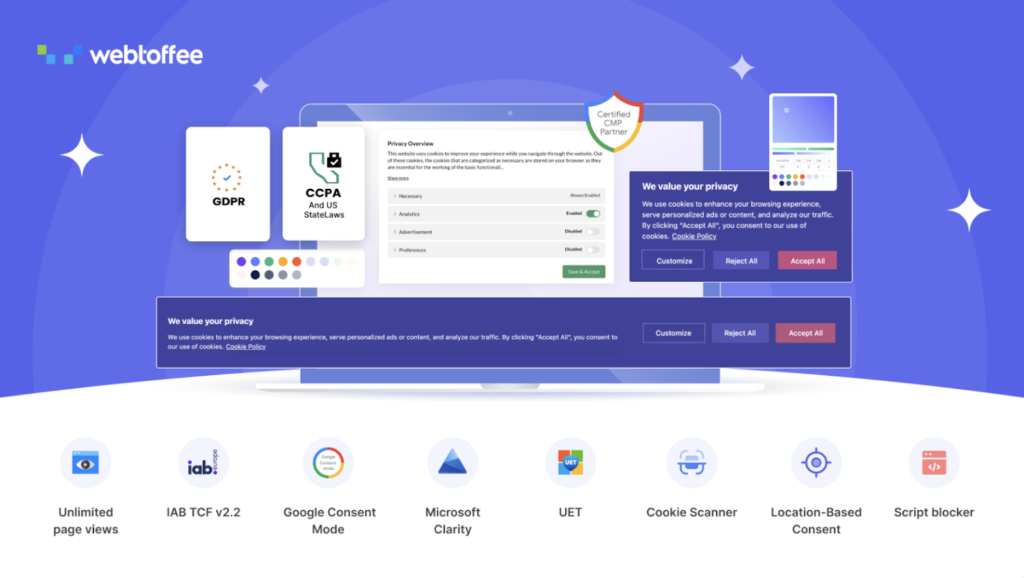
What makes WebToffee’s cookie consent plugin particularly compelling in 2026 is its tight integration with WooCommerce’s marketing stack. Google Tag Manager and GA4 integrations respect consent signals out of the box, ensuring analytics data is collected legally without breaking attribution. For stores investing in India’s rapidly growing eCommerce market, the plugin’s DPDPA readiness is a genuine differentiator that few competitors offer, and as an India-incorporated company, WebToffee is uniquely positioned to stay ahead of local regulatory changes. The plugin also provides a clear, merchant-friendly compliance dashboard that surfaces consent statistics and cookie scan summaries, giving store owners the visibility they need to demonstrate accountability to regulators without needing a dedicated privacy team.
4. Omnisend: Email and SMS Marketing for WooCommerce

Omnisend has established itself as one of the leading email and SMS marketing platforms purpose-built for eCommerce, and its native WooCommerce integration makes it a go-to choice for stores that want to move beyond basic newsletter tools. The platform offers pre-built automation workflows covering the most critical eCommerce touchpoints, including abandoned cart recovery, welcome series for new subscribers, post-purchase follow-ups, product review requests, and win-back sequences for lapsed customers. In 2026, as inbox competition intensifies and open rates decline across generic email platforms, Omnisend’s eCommerce-native segmentation, which allows merchants to filter audiences by purchase history, browsing behavior, and order value, has become a key driver of campaign performance for WooCommerce stores of all sizes.
Omnisend’s unified messaging approach, combining email, SMS, and web push notifications in a single workflow, enables merchants to reach customers on the channel they are most likely to engage with at each stage of the customer journey. The platform’s drag-and-drop email builder includes dynamic product blocks that automatically pull WooCommerce product images, prices, and links into campaign templates, significantly reducing build time. Its performance-based pricing model, where merchants pay based on contact list size rather than email volume, makes it particularly attractive for stores running frequent promotional campaigns. For WooCommerce merchants looking to build a full-funnel communication strategy that drives repeat purchases without requiring a dedicated marketing team, Omnisend provides the automation depth and eCommerce context that general-purpose email tools simply cannot match.
5. Smart Coupons for WooCommerce

Discount strategies remain one of the highest-leverage levers in WooCommerce revenue optimization, and WebToffee’s bulk WooCommerce coupon generator plugin takes WooCommerce’s native coupon system to an entirely new level. The plugin enables store owners to create advanced discount rules, including BOGO (Buy One, Get One) deals, cart-condition-based discounts, product-specific pricing rules, and bulk coupon generation for email marketing campaigns. In 2026, with customer acquisition costs rising and repeat purchase rates becoming more critical to store profitability, smart coupon strategies that target the right customers at the right cart stage are no longer optional. They are a core part of competitive WooCommerce merchandising. The plugin’s intuitive rule builder lets merchants stack conditions without writing code, making complex promotional logic accessible to non-technical store managers.
This Smart Coupons also supports gift card creation and management, URL coupons that auto-apply discounts when a link is clicked, and coupon restriction rules that prevent discount stacking or limit usage to specific customer roles. These features align with the growing trend of personalized promotions, in which merchants send segmented, value-specific offers to different customer tiers rather than blanket sitewide discounts. The plugin integrates cleanly with WooCommerce’s order and customer data, enabling rules triggered by lifetime spend, first-order status, or product category history. For subscription-based stores, the ability to apply recurring discounts to specific plan types makes Smart Coupons a complementary tool for reducing churn and improving subscription trial conversions.
6. WPML: WooCommerce Multilingual and Multi-Currency

As cross-border eCommerce continues to grow faster than domestic trade, WPML has become the most widely adopted solution for building multilingual WooCommerce stores. The plugin enables merchants to translate every element of a WooCommerce store, including product titles, descriptions, checkout fields, email notifications, and shipping method labels, into as many languages as required. In 2026, with the EU’s Digital Single Market strategy encouraging seamless cross-border transactions and customer expectations for localized shopping experiences at an all-time high, WPML’s ability to run a single WooCommerce installation in 65 or more languages while maintaining a unified order management system has made it an essential tool for stores with international ambitions. The WooCommerce Multilingual add-on, included with WPML, handles currency switching, geolocation-based language detection, and per-language shipping configurations.
WPML integrates with major automatic translation services, including DeepL and Google Translate, allowing merchants to generate first-pass translations at scale and then refine them through a built-in translation editor. The plugin’s compatibility with popular page builders such as Elementor and Divi, and with WooCommerce extensions including subscriptions, bookings, and memberships, means multilingual functionality can be added to an existing store without rebuilding from scratch. For SEO, WPML generates hreflang tags automatically and creates language-specific URLs that help multilingual product pages rank in local search results across different regions. In a year when global selling has shifted from a growth strategy to a baseline competitive expectation for mid-sized WooCommerce stores, WPML provides the infrastructure to make international expansion operationally manageable.
7. Product Feed for WooCommerce
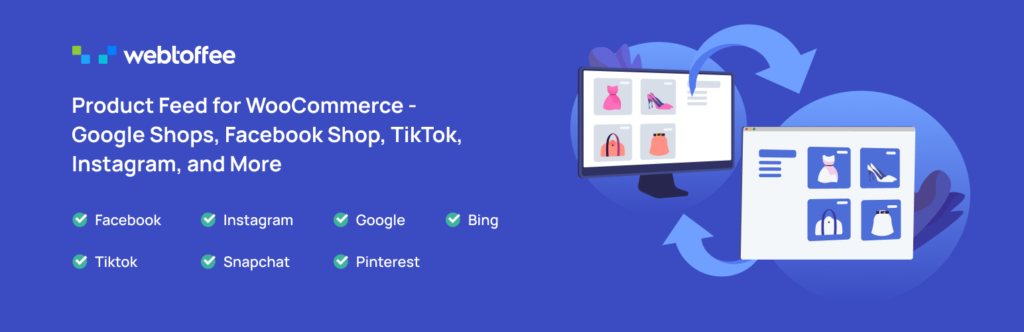
Product Feed for WooCommerce lets store owners generate optimized product feeds for all major shopping channels, including Google Shopping, Facebook and Instagram Catalog, Pinterest Ads, Bing Shopping, and several regional comparison shopping engines, from a single, unified interface. The plugin supports CSV, XML, XLSX, and TXT feed formats and allows merchants to map WooCommerce product attributes to the exact field structure required by each channel, ensuring feeds are accepted and correctly parsed without manual reformatting. In 2026, as Google Performance Max campaigns and Meta Advantage+ Shopping campaigns become the dominant paid acquisition channels for eCommerce brands, the quality and accuracy of a store’s product feed directly and measurably impact ad performance. Merchants can configure filter rules to include or exclude products based on stock status, category, price range, or custom taxonomy, keeping feeds clean and focused on high-intent inventory rather than sending every product indiscriminately to every channel.
What makes Product Feed particularly valuable in the current landscape is its support for real-time and scheduled feed refreshes, ensuring that price changes, stock updates, and new product additions are reflected across all connected channels without manual re-export. The plugin handles variable products correctly by generating a separate feed entry for each variation, including variation-specific images, prices, and attributes, which is a requirement for Google Shopping approval and a common source of disapproved listings for stores using simpler feed tools. For stores running multi-currency storefronts or selling across different regions, the plugin supports per-feed currency and language configuration, allowing a single WooCommerce installation to serve correctly formatted feeds to different market-specific advertising accounts. As product listing ads continue to account for a growing share of eCommerce revenue in 2026, having a reliable, channel-aware feed management tool is no longer an advanced feature for large retailers. It is a baseline requirement for any WooCommerce store running paid acquisition campaigns.
A free version is available on WordPress.org, offering support for Google Shopping and a handful of other channels, so merchants can validate their feed setup before upgrading to the full channel library
8. ShipStation: WooCommerce Shipping and Order Fulfillment

Efficient order fulfillment is one of the most operationally critical aspects of running a competitive WooCommerce store in 2026, and ShipStation is the platform thousands of merchants rely on to manage the complexity of multi-carrier shipping at scale. The ShipStation integration for WooCommerce automatically imports orders in real time, allowing store teams to compare rates across carriers, including UPS, FedEx, USPS, DHL, and regional couriers, before printing bulk shipping labels in a single batch. In a year when customer expectations for fast, affordable, and transparent delivery have reached an all-time high, ShipStation’s ability to surface the cheapest or fastest carrier option for each shipment based on weight, destination, and service level is a genuine operational advantage for stores that handle more than a handful of orders per day.
Beyond label printing, ShipStation provides branded tracking pages that replace the carrier’s generic tracking experience with the merchant’s own logo, colors, and messaging, creating a post-purchase touchpoint that reinforces brand identity and reduces support tickets for ‘where is my order?’ questions. The platform’s return management portal allows customers to initiate return requests and print prepaid return labels without contacting customer service, a feature that has become an expectation among online shoppers in 2026. For WooCommerce stores managing inventory across multiple warehouses or fulfillment centers, ShipStation’s location-based routing rules automatically assign each order to the nearest or most efficient fulfillment point. Its combination of carrier breadth, automation depth, and post-purchase experience tooling makes ShipStation a foundational part of the operational stack for any WooCommerce merchant processing significant order volume.
9. Import Export Suite for WooCommerce
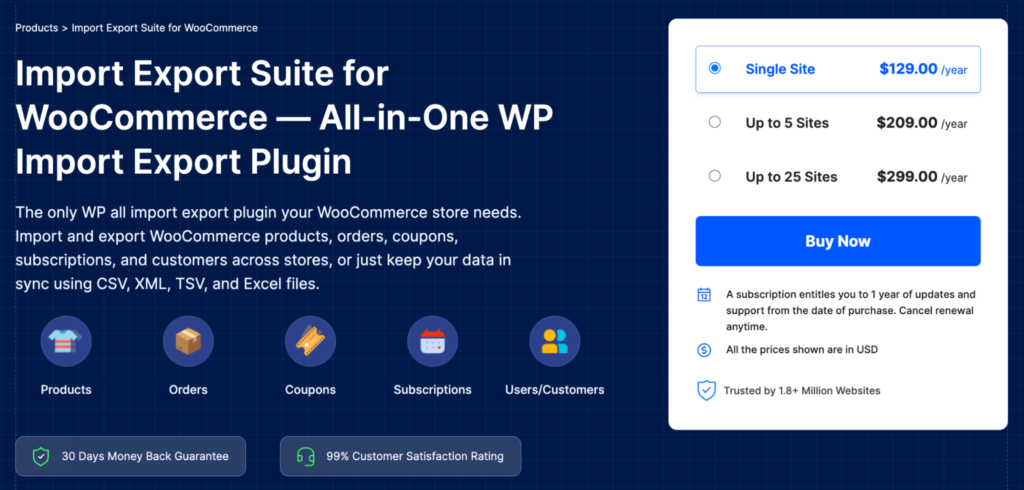
WebToffee Import Export Suite for WooCommerce is one of the most comprehensive data management plugins available for WooCommerce, enabling merchants to import and export virtually every data type in their store, including products, orders, customers, coupons, subscriptions, reviews, and product categories, all through an intuitive, code-free interface. The plugin supports CSV, XML, TSV, and Excel formats and provides a field mapping interface that allows merchants to align columns in their source file with the corresponding WooCommerce fields, making it equally useful for migrating data from other eCommerce platforms, performing bulk catalog updates, and creating scheduled data backups. In 2026, as WooCommerce stores scale to larger catalogs and more complex data structures, the operational burden of managing product information, customer records, and order histories manually has become a significant bottleneck. The Import Export Suite addresses this directly by turning what would otherwise be developer-dependent tasks into self-service workflows that store managers can execute without technical support.
The plugin’s advanced filtering and selective export capabilities are particularly useful for stores that need to extract specific data subsets, such as all orders within a date range, all customers from a particular country, or all variable products in a given category, for use in external analytics tools, ERP systems, or marketing platforms. Scheduled exports allow stores to automate regular data syncs to third-party systems without manual intervention, while the conditional import feature enables incremental updates that modify only the records that have changed, preventing duplication and preserving data integrity across large datasets. For stores handling product catalog updates from a supplier’s spreadsheet, the plugin’s column mapping and default value settings dramatically reduce the cleanup work required before each import. With support for WooCommerce extensions including subscriptions, bookings, and custom product fields, the Import Export Suite covers the full complexity of a mature WooCommerce store and remains one of the most reliable tools available for managing data at scale.
10. Rank Math SEO for WooCommerce

Search engine optimization remains one of the highest-ROI acquisition channels for WooCommerce stores, and Rank Math has emerged as the most feature-complete SEO plugin in the WordPress ecosystem for merchants who want granular control over how their product pages perform in organic search. The plugin’s WooCommerce SEO module automatically generates Product schema markup, including price, availability, and review data, giving product pages the structured data they need to qualify for rich snippets in Google Search. In 2026, with AI-driven search results placing even greater weight on well-structured, schema-rich content, Rank Math’s automatic schema generation for WooCommerce products, categories, and breadcrumbs gives stores a meaningful technical SEO advantage without requiring manual JSON-LD configuration for every listing.
Rank Math bulk SEO editor allows merchants to update meta titles, meta descriptions, focus keywords, and canonical tags across hundreds of product pages simultaneously, a capability that would otherwise require developer time or expensive enterprise SEO tools. The plugin’s keyword rank tracker, 404 error monitor, internal link suggestions, and image SEO automation round out a feature set that covers both technical and on-page optimization from a single dashboard. For WooCommerce stores running large catalogs, the WooCommerce-specific redirections module automatically handles 404 errors caused by discontinued or out-of-stock products, preserving link equity and preventing ranking drops when products are removed. With a free tier that outperforms most premium alternatives and an advanced version that rivals dedicated SEO platforms, Rank Math delivers outstanding value for WooCommerce merchants at every growth stage.
Conclusion
The WooCommerce plugin landscape in 2026 reflects the broader forces reshaping eCommerce: tighter regulatory requirements, rising customer expectations, intensifying competition for wallet share, and the growing importance of retention, performance, and global reach. The ten plugins highlighted in this article, five from WebToffee’s continuously evolving suite and five outstanding tools from the wider ecosystem, each address a critical dimension of running a competitive and customer-centric WooCommerce store.
For store owners evaluating their plugin stack, the key takeaway is that the best tools in 2026 are those that align feature depth with business-specific goals. WebToffee’s plugins stand out for their combination of affordability, active development, and strong WooCommerce-native integration, making them particularly compelling for small to medium-sized businesses that need professional-grade functionality without enterprise-level investment. Whether the priority is EU invoicing compliance, privacy-first marketing, revenue-maximizing subscriptions, or a loyalty strategy that keeps customers coming back, there is a WebToffee plugin designed for that exact challenge.